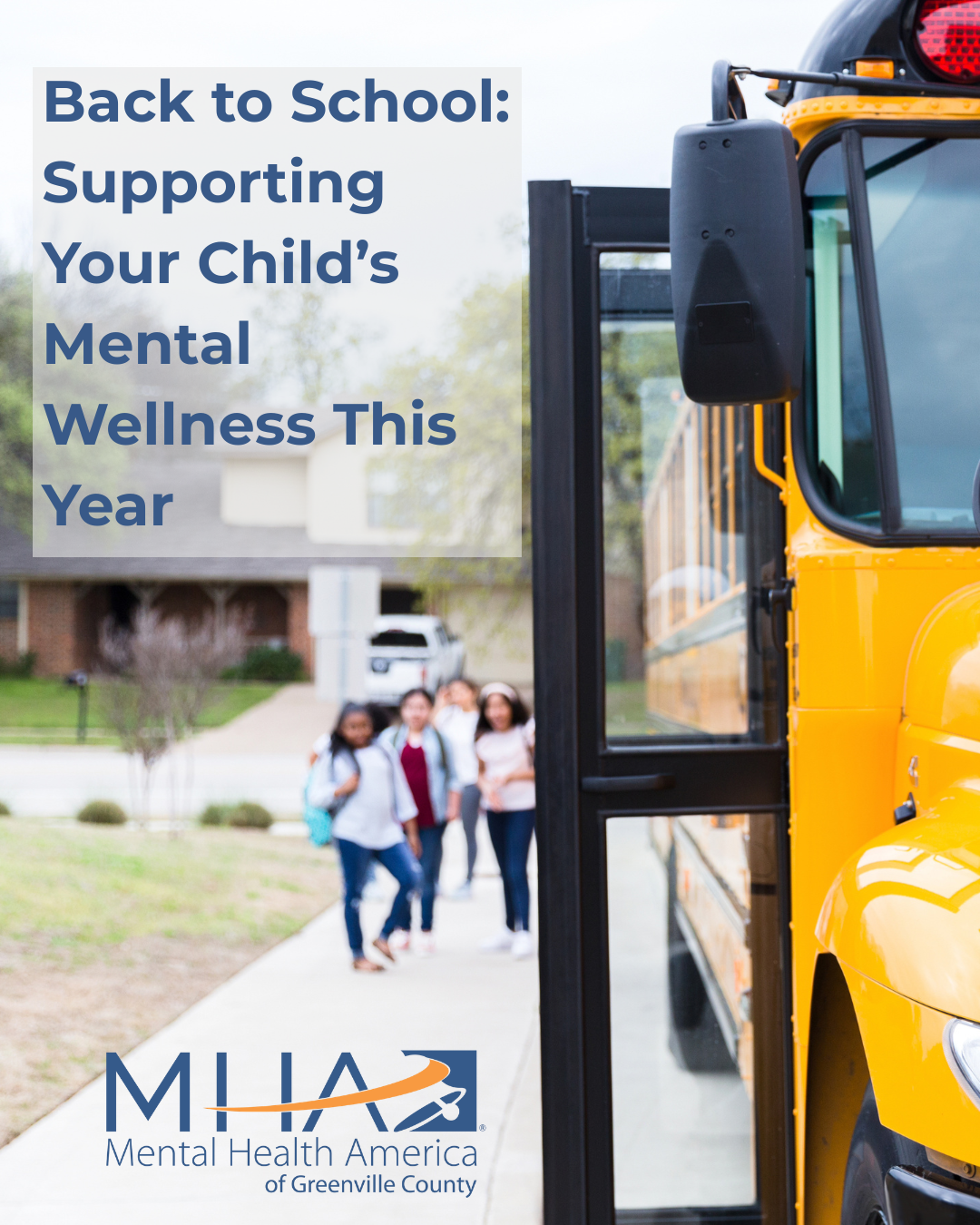
The Dog days of summer are here, and that means the start of the school year is upon us with all the excitement, fresh opportunities, and new routines that come with it as well as a big dose of uncertainty. New classrooms, changing friendships, academic expectations, and busy schedules can leave students of all ages feeling anxious or overwhelmed.
A little nervousness is a normal part of any transition. The key is helping children and teens build confidence, develop healthy coping skills, and know where they can turn when they need support.
Feeling safe and connected at school goes beyond understanding classroom rules and routines. It means knowing there are people who care. One of the most powerful protective factors for a young person’s mental health is having a trusted adult they can turn to. Encourage your child to identify supportive adults at school—a teacher, coach, school counselor, school psychologist, nurse, or another staff member—who can offer encouragement, guidance, and a listening ear.
At home, simple conversations can make a significant difference. Don’t just ask how their day was, lead the conversation. Asking your child what they are excited about, what worries they may have, and who they feel comfortable talking to at school helps create an environment where emotions are welcomed and challenges can be shared.
Just as students fill their backpacks with notebooks, pencils, and supplies for learning, they can also build a “mental health toolbox” filled with strategies to help them manage stress. Taking a few deep breaths, carrying a comforting grounding item, moving their body, creating art, listening to music, writing in a journal, or spending time away from screens are all ways students can reset and regain a sense of calm when emotions feel overwhelming.
Occasional stress and sadness are part of life; persistent changes in mood, anxiety, fear, or behavior that interfere with daily activities may be a sign that additional support is needed. Reaching out for help is a sign of strength, and families do not have to navigate those challenges alone.
Greenville County students have access to several school-based mental health resources. Through a partnership with Greater Greenville Mental Health, therapists are embedded in every county high school. Students may also access Gaggle Virtual Therapy and coaching services through a referral from their high school counselor. Certified school psychologists are also available to support students, families, and educators through assessment, consultation, and strategies to address social, emotional, behavioral, and learning needs.
Families across South Carolina can also access free mental health resources, including the Mental Health America Screening Tool, Hopeful Minds, a digital wellness platform offering self-guided tools and information, and Hope Connects You and Hope Connects You Kids & Youth, which connect individuals and families with behavioral health services and support.
As students return to classrooms this year, remember that success is about more than grades and achievements. When children feel safe, supported, and connected, they are better able to learn, grow, and thrive. We here at MHAGC are ready to support with resources and education. If you or your child, feel overwhelmed beyond what you can handle, do not hesitate to reach out to 988 to connect to a crisis counselor when you need it. Because strength begins with connection, every student (and caregiver) deserves to know they are not alone and that help is always available.
Enjoying this newsletter? Please share!
Use the buttons below to help friends and colleagues connect with us: