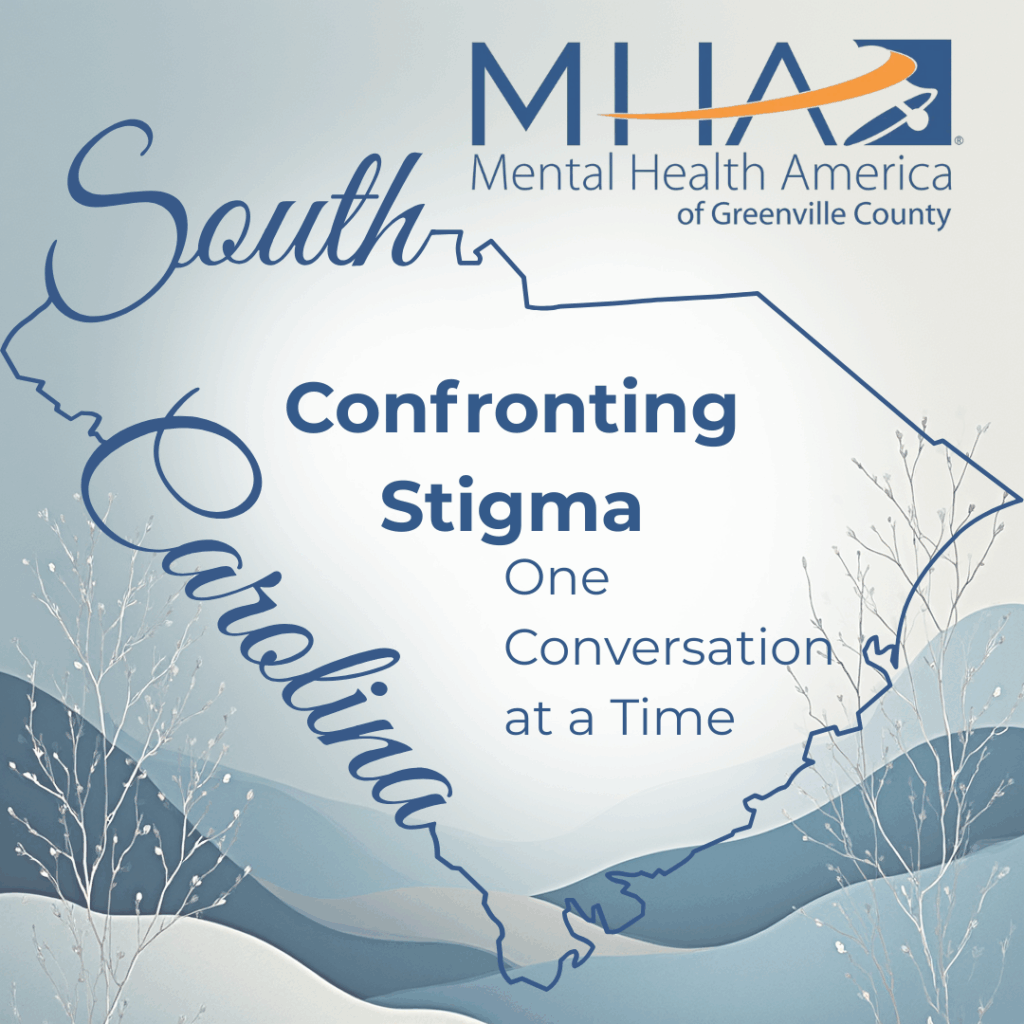
Mental Health America of Greenville County: Confronting the Stigma in South Carolina, One Conversation at a Time
by Chris Hale, Community Outreach Specialist
Mental health is a crucial aspect of overall well-being, yet it often remains on the periphery of public conversation. In recent years, there has been a growing recognition of the importance of discussing mental health openly, especially as we see its profound impact on families, workplaces, and communities. Yet, in South Carolina and across the nation, mental health and suicide remain topics many are hesitant to address. This reluctance can perpetuate stigma and create barriers for those who need support the most.
In my role as Community Outreach Specialist, I frequently engage with members of our community about a variety of topics, and mental health is always a significant point of discussion. These interactions reveal a common theme: most people have been touched by mental health struggles, whether personally or through a loved one. Despite this, many admit they have never spoken openly about their experiences. I recall a recent conversation with a colleague who confided that a close friend had battled depression for years, but they rarely discussed it for fear of saying the wrong thing or making the situation worse. This, and so many conversations I have had, underscore the deep need for compassionate dialogue—and the courage it often takes to initiate such discussions.
One of the most significant barriers to addressing mental health openly is the dreaded S-word: stigma. Many individuals are afraid to talk about their struggles due to concerns about judgment, discrimination, or being perceived as weak or lacking willpower. In the realm of mental health, this seems preposterous. Sadly, in everyday life, this fear is not unfounded; societal misconceptions about mental illness persist, leading to feelings of embarrassment and isolation among those who are struggling. Yet, when given a safe space – after an event, or a QPR class, or via the relative anonymity of the 988 Suicide and Crisis Lifeline – people often share that someone close to them – a family member, a friend, a co-worker – has experienced depression, anxiety, or thoughts of suicide. This all too frequent occurrence indicates that mental health issues are more common than we would like to think and deserve to be addressed with the kind of empathy and openness that removes the stigma, shame, and embarrassment.
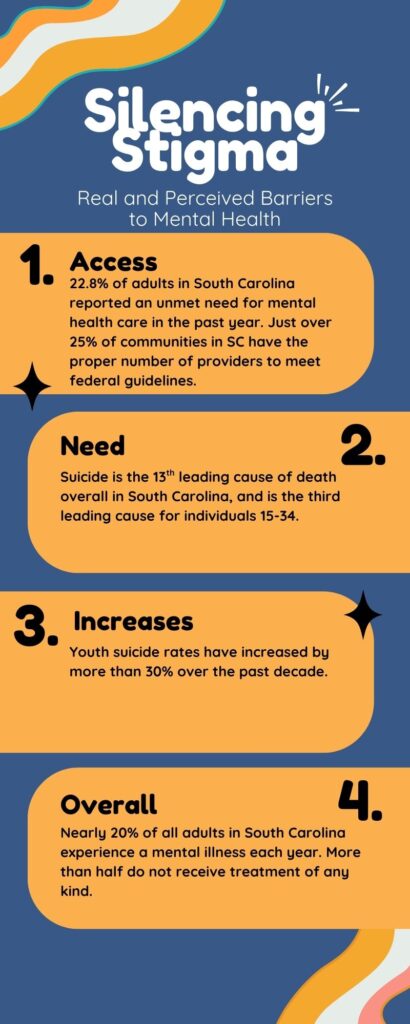
While silencing the stigma is crucial, it is just one part of the equation. Accessing mental health care can be challenging for many in South Carolina. Both real and perceived barriers – including out-of-pocket costs, inadequate insurance coverage, provider shortages, and transportation difficulties – often prevent individuals from accessing the help they need. According to the National Alliance on Mental Illness (NAMI), 22.8% of adults in South Carolina reported an unmet need for mental health care in the past year (NAMI, 2023). Furthermore, the American Foundation for Suicide Prevention found that just over 25% of communities in South Carolina had the proper number of mental health providers to meet the federal guidelines (AFSP, 2025), with rural communities often facing the greatest challenges. These statistics highlight the urgent need for awareness and action.
In South Carolina alone, suicide is the 13th leading cause of death overall, and the third leading cause for individuals aged 15–34 (AFSP, 2025). In 2021, studies indicate that the state’s youth suicide rate increased by more than 30% over the past decade (Centers for Disease Control and Prevention, 2021). Additionally, nearly 20% of adults in South Carolina experience a mental illness each year, yet more than half do not receive treatment (NAMI, 2023). These numbers represent real people — our family, neighbors, colleagues, and friends — who often suffer in silence and fear.
Addressing mental health and suicide in the public eye requires a collective effort. Through honest, compassionate conversations, we can reduce stigma and not only encourage those who are struggling to seek help but also provide them with the tools and resources necessary to achieve mental health. Together, we must strive to foster a society where mental health is recognized and valued as a vital component of physical health, and everyone feels empowered to reach out for help. If you or someone you know is in crisis or having thoughts about suicide, please call, text, or chat 988; No judgment, just help. Someone is always there, 24/7, 365. No one has to go through this alone.
References:
American Foundation for Suicide Prevention. (2025). Suicide facts & figures: South Carolina. https://afsp.org/facts/south-carolina
Centers for Disease Control and Prevention. (2021). Youth risk behavior surveillance system.
National Alliance on Mental Illness. (2023). Mental health in South Carolina. https://www.nami.org/wp-content/uploads/2025/05/SouthCarolina-GRPA-Data-Sheet-8.5-x-11-wide.pdf