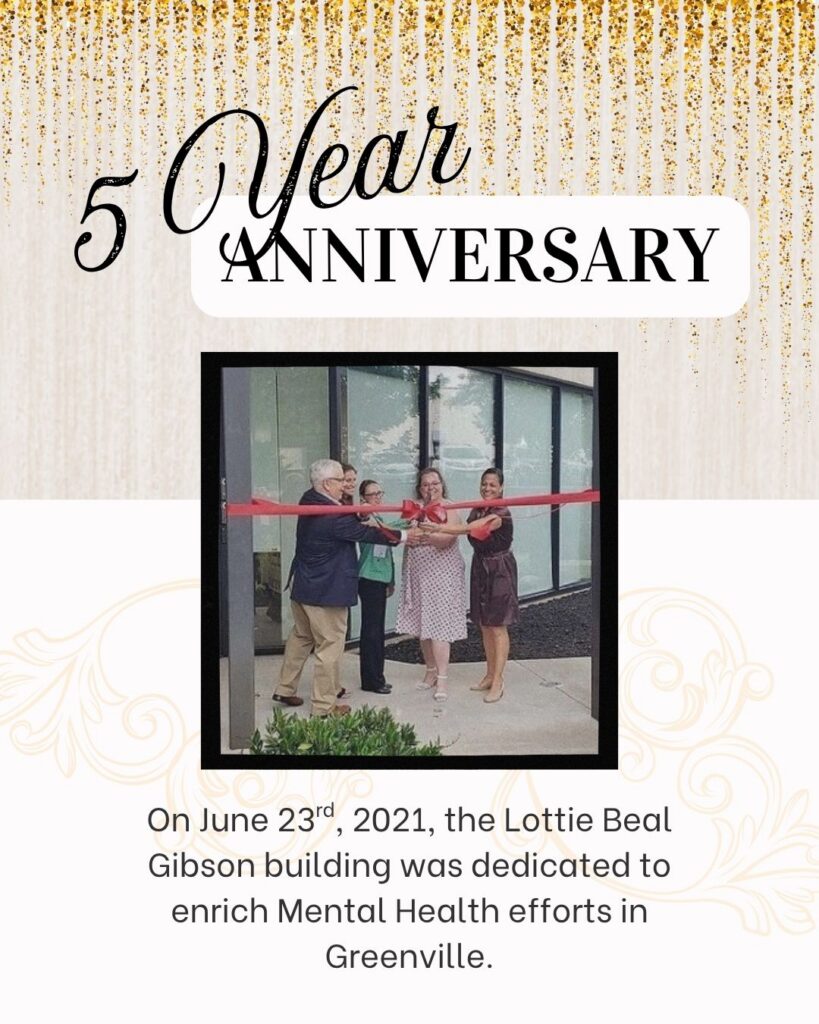
June 23rd marked an important milestone for Mental Health America of Greenville County: five years since we moved into the Lottie Beal Gibson Building.
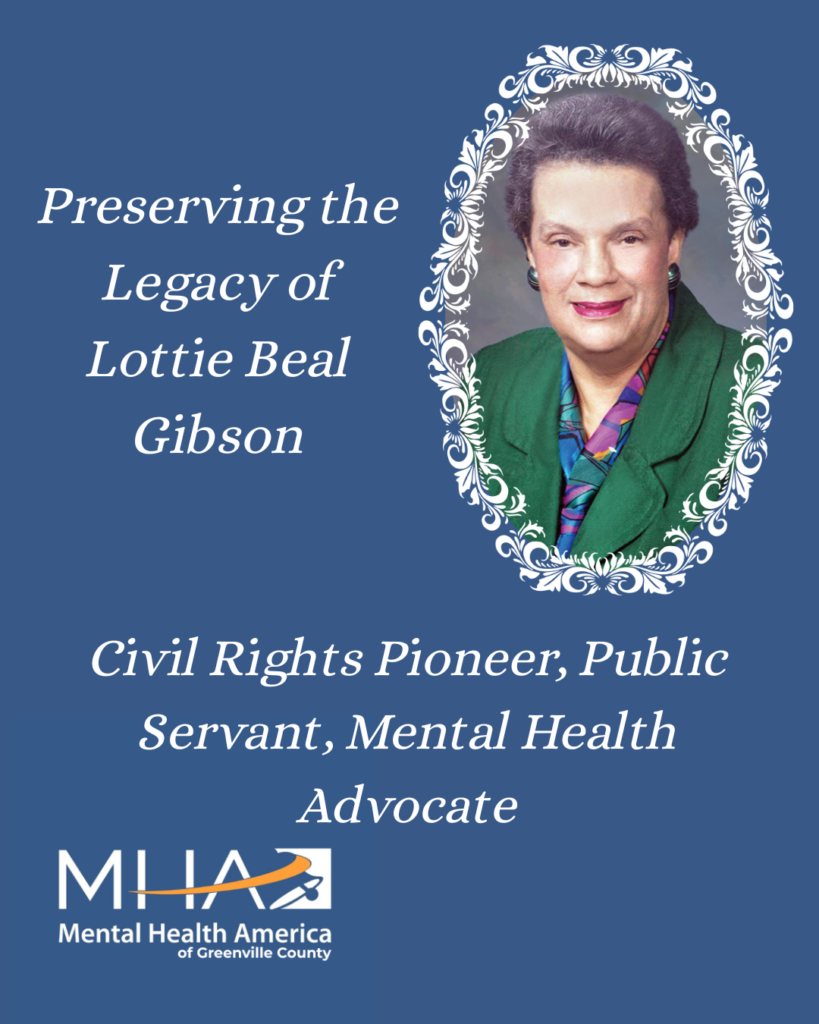
As we approached this anniversary, I found myself thinking about the remarkable woman whose name graces our building and the legacy she left for all of us.
For more than 60 years, Lottie Beal Gibson dedicated her life to serving Greenville’s most vulnerable residents. A civil rights pioneer, educator, public servant, and advocate, she worked tirelessly to ensure that people facing hardship were seen, heard, and supported. Whether helping families experiencing homelessness, championing educational opportunities, supporting individuals struggling with addiction, or advancing equality throughout our community, she believed deeply in the power of service and human connection. That belief continues to inspire the work happening within these walls every day.
When the Lottie Beal Gibson Building was dedicated in June 2021, our community was still navigating the challenges of the pandemic. Demand for mental health and substance use services was rising, and many individuals and families were facing unprecedented stress, isolation, grief, and uncertainty.
At that critical moment, Greenville County invested in a vision that brought Mental Health America of Greenville County, NAMI Greenville, and The Phoenix Center together under one roof. The result was more than an expanded facility—it was the creation of a collaborative space where organizations could work together to provide support, treatment, education, and hope.
For Mental Health America of Greenville County, the move created opportunities that continue to shape our future. The additional space allowed us to expand our staff, strengthen our infrastructure, and prepare for the transformation of crisis services in South Carolina. That growth helped position our Crisis Intervention Services program for the launch of 988, ensuring that more people could access life-saving support whenever they needed it.
Over the past five years, we have continued to grow alongside the needs of our community. We have answered hundreds of thousands of calls, texts, and chats from people reaching out during some of the most difficult moments of their lives. We have strengthened partnerships, expanded services, and worked every day to ensure that no one faces a mental health challenge alone. Everything we do is about building connection.
In many ways, that desire to create connections reflects the very values that defined Lottie Gibson’s life. She understood that lasting change happens when communities come together to support one another. She believed that every person deserves dignity, compassion, and access to help when they need it most.
Today, the organizations that call this building home carry that vision forward. Whether someone is seeking crisis support, addiction recovery services, mental health education, or community resources, they can find caring professionals and advocates working together to meet them where they are.
As we celebrate this anniversary, I want to express my sincere gratitude to everyone who has helped make these past five years possible.
To our supporters, thank you for believing in our mission.
To our community partners, especially The Phoenix Center and NAMI Greenville, thank you for standing beside us in service to our neighbors.
To our staff and volunteers, thank you for bringing compassion, professionalism, and dedication to this work each and every day.
And to those who have trusted us during difficult moments, thank you for allowing us to walk alongside you on your journey.
The story of the Lottie Beal Gibson Building is ultimately a story about connection—people coming together to serve, support, and strengthen the greater community. It is a story that began long before 2021 through the life and leadership of Lottie Gibson, and it continues every day through the work being done under the banner of her name.
As we look toward the future, we remain committed to building on that legacy. The need for mental health support continues to grow, and we are determined to grow alongside it. We envision a community where all people live with hope, mental health is prioritized and accessible, stigma and suicide are erased, and everyone knows they have somewhere to turn when they need help.
Five years ago, we moved into a building named for a woman who dedicated her life to caring for others. Every day since, we have been reminded of the responsibility—and privilege—of carrying that legacy forward.