117 Years of Mental Health America
On February 19, Mental Health America marks its 117th anniversary—a milestone of both reflection and resolve. For more than a century, the organization has pushed the nation to see mental health differently: with compassion instead of fear, understanding instead of stigma, and connection instead of isolation.
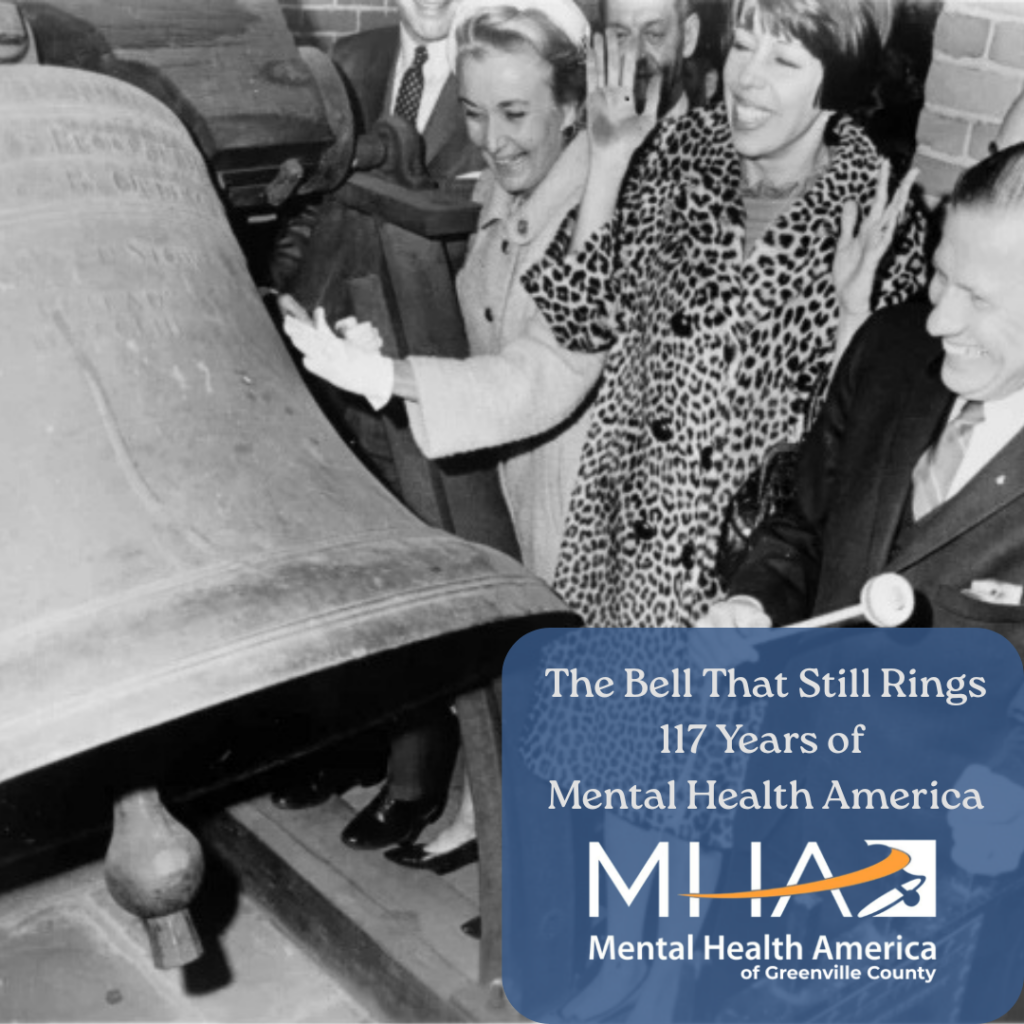
Few symbols capture that journey more powerfully than the Mental Health America Bell.
In the earliest days of mental health treatment, people living with mental illness were often restrained with iron chains and shackles—physical manifestations of misunderstanding, neglect, and fear. As science, advocacy, and humanity advanced, those practices ended. But the remnants remained.
In the early 1950s, Mental Health America issued a call to asylums across the country to send in their discarded chains and shackles. On April 13, 1956, at the McShane Bell Foundry in Baltimore, those instruments of confinement were melted down and recast into something entirely new: a 300-pound Bell forged as a symbol of hope.
Inscribed on the Bell are words that still resonate today:
“Cast from shackles which bound them, this bell shall ring out hope for the mentally ill and victory over mental illness.”
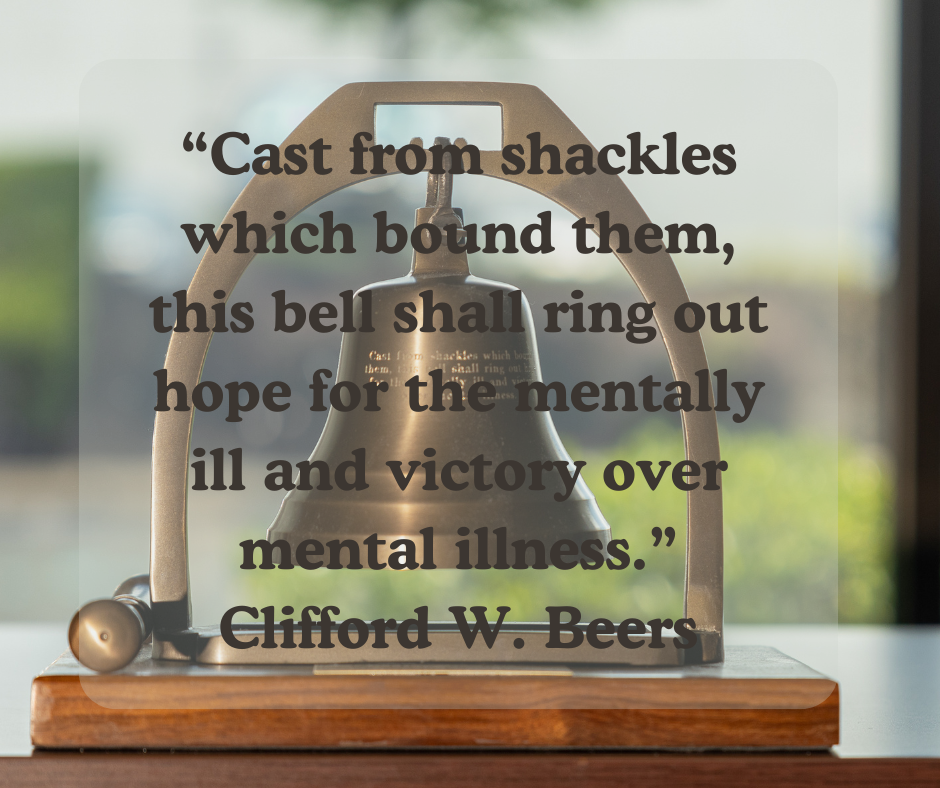
The Bell is no longer a reminder of physical restraints. However, it remains a powerful symbol of the invisible ones that still exist: stigma, misunderstanding, isolation, and lack of access to care. And that is where the work continues to matter, every single day.
At MHAGC, the Bell’s message lives on through connection. Through answered calls on the Reassurance Line. Through community education that replaces fear with facts. Through peer support, housing advocacy, suicide prevention efforts, and education that ensure people are not facing mental health challenges alone. Strength begins with connection, and every conversation, class, and call helps loosen those invisible chains.
As we reflect on 117 years of progress, the bell also invites us to look inward. Advocacy doesn’t only happen at podiums or in policy—it starts with self-care. Caring for mental health is not indulgent or optional; it is foundational. Rest, boundaries, and checking in with yourself and others; these are modern acts of resistance against burnout, stigma, and isolation.
When we practice self-care, we honor those who fought to replace chains with care. When we talk openly about mental health, we help ring out hope. And when we support our own mental health, we ensure that the promise symbolized by the bell continues to move forward, not backward.
Over the years, national mental health leaders and advocates have rung the Mental Health America Bell to mark progress and recommit to the work ahead. Each ring is a reminder that while much has changed in 117 years, the mission remains urgent—and hopeful.
This February, as we mark Mental Health America’s anniversary, may we listen closely to what the Bell still asks of us: to care for ourselves, to care for one another, and to keep choosing connection over silence.
Because the Bell doesn’t just remember the past. It calls us forward.