
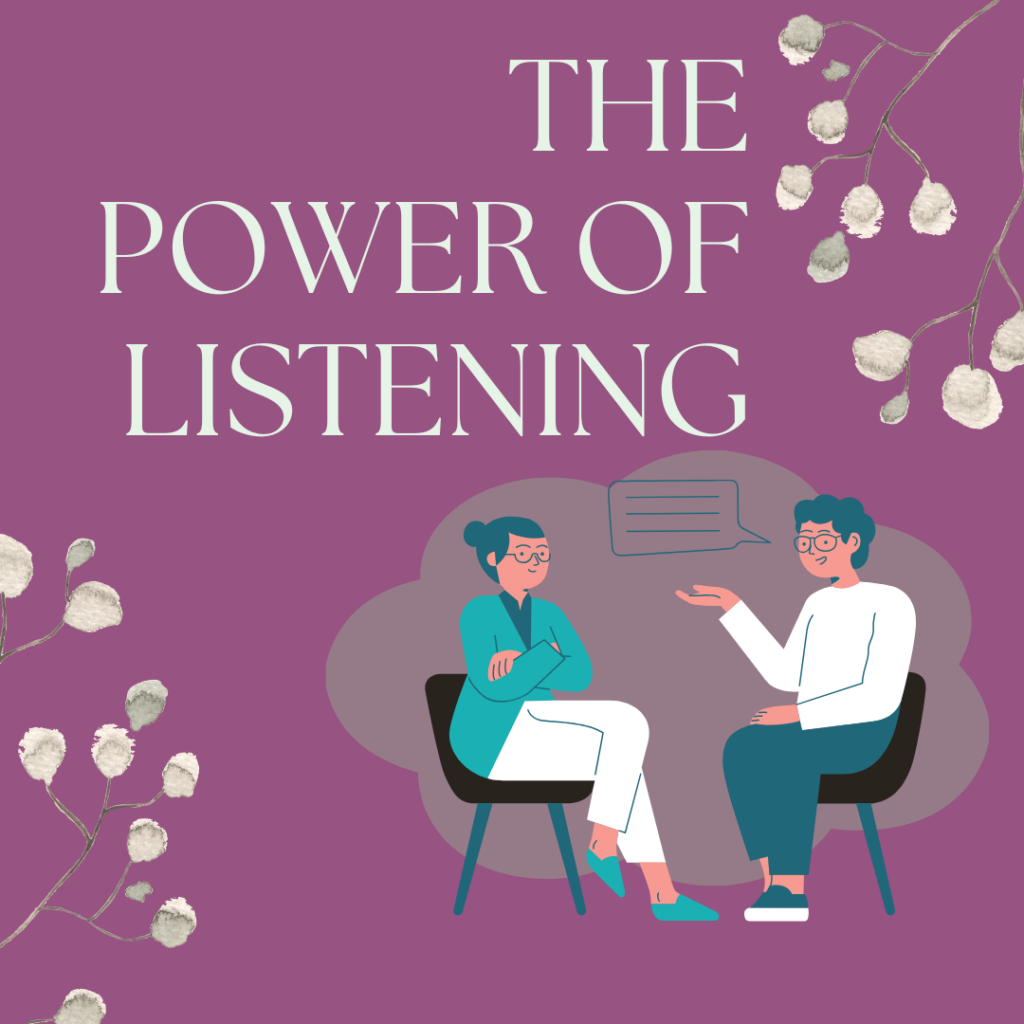
At Mental Health America of Greenville County’s 988 Suicide & Crisis Lifeline Call Center, active listening is not just one part of training — it is the foundation of everything we do. Nearly 30% of a specialist’s initial training is devoted to learning how to actively listen. Before answering a call independently, each specialist practices how to truly hear someone and how to integrate that listening into every part of the conversation in order to build meaningful engagement.
Active listening is more than simply hearing words. It is the intentional act of being attentive to what is communicated both verbally and nonverbally, and then relaying that understanding back so it can be clarified, affirmed, and strengthened. It requires noticing not only what is said, but how it is said — the pace of speech, the pauses, the timbre of a voice, the careful selection of words, or the rush of emotion. When done well, active listening builds trust. And trust creates the safety needed for honesty and connection.
When someone calls the 988 Suicide & Crisis Lifeline, they are often navigating fear, grief, confusion, or emotional overwhelm. Our role is not to fix, diagnose, judge, or direct. Our role is to be present.
Psychologist Carl Rogers, a pioneer of person-centered therapy, captured this beautifully when he wrote:
“When someone really hears you without passing judgment on you, without trying to take responsibility for you, without trying to mold you, it feels damn good… When I have been listened to and when I have been heard, I am able to re-perceive my world in a new way and to go on. It is astonishing how elements which seem insoluble become soluble when someone listens.”
This philosophy lives at the heart of our work.

Within our call center, we often use the phrase “Sitting in the Muck.” When someone reaches out to 988, they are often in the muck — the messy, tangled, painful place where emotions feel heavy and solutions feel distant. Through active listening and intentional engagement, our specialists metaphorically sit beside them in that space. We do not rush them through it. We do not minimize it. We do not tidy it up to make it more comfortable.
We sit with them.
In that act of sitting, something powerful happens. Callers are deeply heard without expectation or judgment. They are given room to speak freely about what they are feeling in that moment. Active listening gives dignity to the experience. It often brings clarity to confusion and helps callers uncover the deeper need beneath the surface of the crisis. Sometimes, the simple act of being fully heard allows a person to see their world differently and take the next step forward.
Strength begins with connection. And connection begins with listening.
While this practice is central to our 988 specialists, it is not limited to crisis work. Active listening can transform everyday relationships — with spouses, children, coworkers, and friends. It begins with presence. Silencing distractions and quieting the inner dialogue that prepares a response allows us to give someone our full attention. It means listening not only to their words but to their tone, their pace, and the pauses that may signal emotion. It means asking open-ended questions that invite reflection rather than shut it down — “Can you tell me more about that?” or “What do you think about that?”
Active listening also requires reflection and restraint. Paraphrasing what we hear ensures understanding and communicates care. Withholding judgment creates safety. Practicing patience — allowing silence, resisting interruption, and avoiding the urge to jump to action — keeps the focus where it belongs: on the other person’s experience.
Active listening is not complicated. But it is intentional. It requires humility, patience, and presence.
At MHAGC and particularly through our involvement with 988, we practice it every day because we know that when someone feels heard, something shifts. Confusion can soften. Overwhelm can steady. Hope can re-enter the conversation.
And sometimes, that shift is enough to help someone keep going.